The Rising of Water Bills: South West Water boss Salary £428,000
For many working-class families across the United Kingdom, the cost of essential services continues to escalate, placing significant strain on household budgets.
February 10, 2026 21:42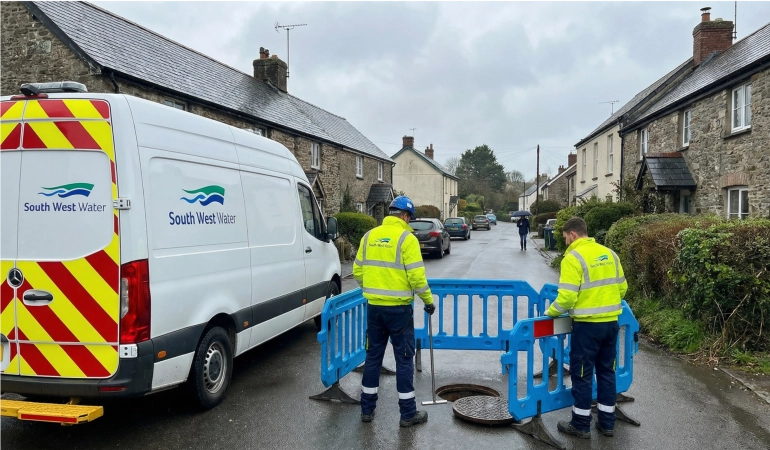
Among these, water bills represent a non-negotiable expense, often perceived as disproportionately high when juxtaposed with the remuneration packages of water company executives. This article examines the financial burden faced by a typical household, specifically a working-class father paying over £850 annually for water in a small flat, against the backdrop of executive salaries at South West Water Limited.
Executive Remuneration at South West Water Limited
An analysis of the latest Annual Report and Financial Statements for South West Water Limited (Company number 02366665), for the year ended 31 March 2025, reveals substantial remuneration for its executive and non-executive directors . While these figures are publicly available through Companies House, their scale often sparks public debate regarding fairness and accountability within essential service providers.
Executive Directors' Remuneration (2024/25)
The following table outlines the total remuneration for key executive directors, including base salary, benefits, and pension contributions. It is noteworthy that no annual bonuses were paid for the 2024/25 financial year, yet the total figures remain considerable.
| Director | Role | Base Salary (£) | Total Remuneration (£) |
| Susan Davy | CEO | £356,000 | £428,000 |
| Laura Flowerdew | CFO | £223,000 | £255,000 |
| John Halsall | Former COO | £126,000 | £144,000 |
| Steve Buck | Former CFO | £97,000 | £110,000 |
Note: Figures for John Halsall and Steve Buck reflect their remuneration for the period they served in their roles during the financial year. Susan Davy's figures represent the portion re-charged to South West Water from the parent company, Pennon Group plc .
Non-Executive Directors' Fees (2024/25)
Non-executive directors, who provide oversight and strategic guidance, receive fees for their services. These fees, while not salaries in the traditional sense, also contribute to the overall executive compensation landscape.
| Non-Executive Director | Total Fees (£) |
| David Sproul | £131,000 |
| Iain Evans | £65,000 |
| Loraine Woodhouse | £59,000 |
| Jon Butterworth | £51,000 |
| Dorothy Burwell | £47,000 |
| Gill Rider | £58,000 |
| Claire Ighodaro | £43,000 |
Note: 70% of these fees are recharged through Pennon Group plc .
The Burden on Working-Class Households
In stark contrast to these figures, ordinary households grapple with steadily increasing utility costs. Consider the case of a working-class father supporting two adults and one child in a small flat, facing an annual water bill exceeding £850. This amount represents a substantial portion of disposable income for many families, often necessitating difficult choices in household budgeting.
For such a family, an annual water bill of £850 translates to approximately £70.83 per month. While water is an essential service, the perceived value and affordability become critical issues when executive remuneration reaches hundreds of thousands of pounds. The disparity raises fundamental questions about the equitable distribution of wealth and the social responsibility of privatized utility companies.
Public Concern and the Call for Accountability
The significant gap between executive pay and household expenses fuels public concern and calls for greater accountability within the water industry. Many consumers, particularly those in working-class communities, feel that their financial struggles are overlooked while company leadership enjoys considerable financial rewards. This sentiment is exacerbated when service quality issues or environmental concerns, such as sewage discharges, also come to light.
While companies argue that high salaries are necessary to attract and retain top talent, critics contend that such remuneration packages are out of touch with the economic realities faced by the majority of their customers. The argument for performance-related pay often falls flat when customers perceive a decline in service or an increase in costs without a corresponding improvement in their own financial well-being.
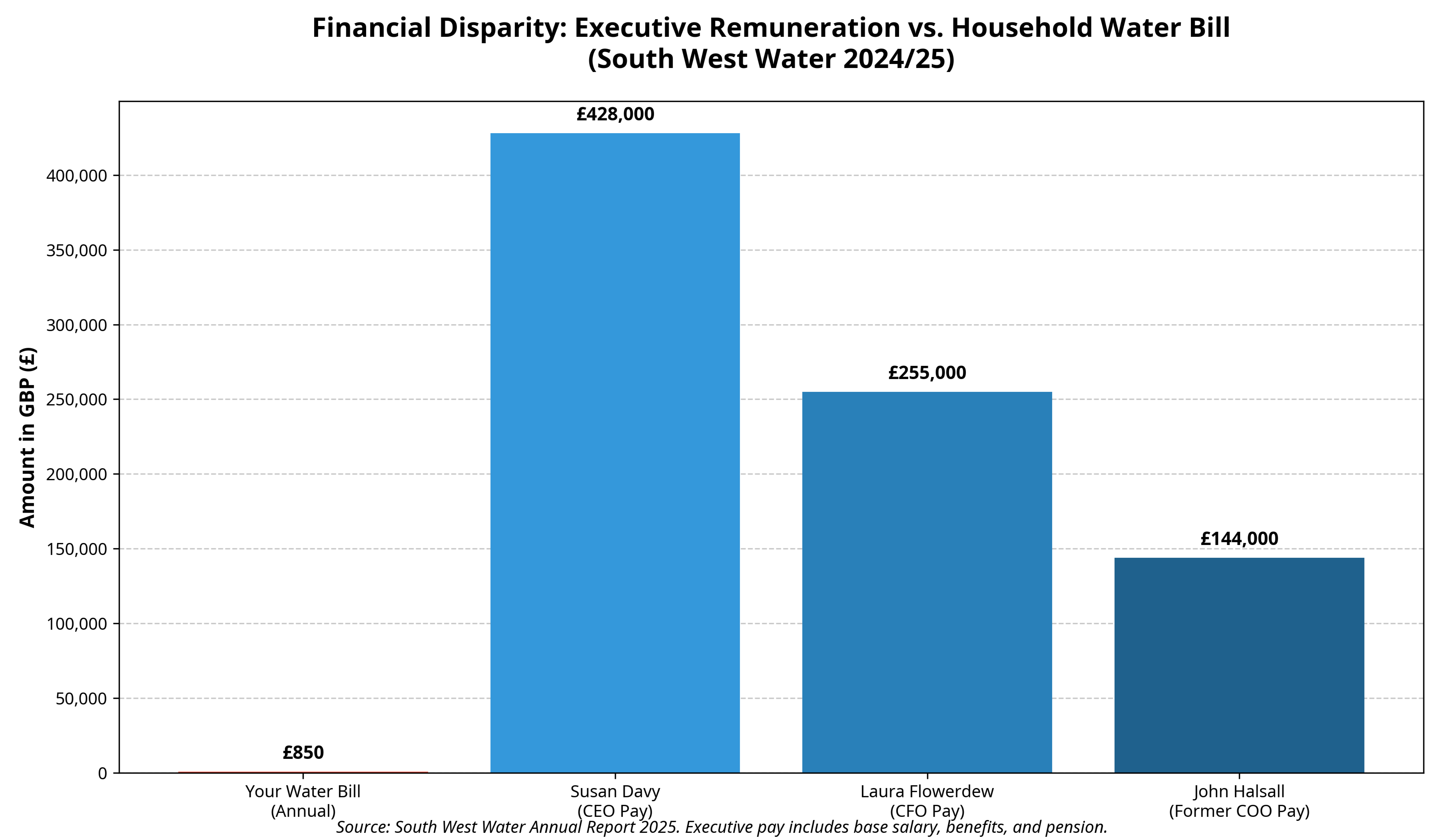
The case of South West Water Limited's executive remuneration, when viewed alongside the substantial water bills borne by working-class families, underscores a broader societal challenge. It highlights the tension between corporate profitability and social equity, particularly in sectors providing essential public services. For a working-class father, an £850 annual water bill is not merely a number; it is a tangible financial pressure that impacts daily life. Addressing this disparity requires a renewed focus on transparent governance, fair pricing mechanisms, and a genuine commitment to balancing shareholder interests with the welfare of the communities served.
References
User Comments (0)
No comments added yet.
Comments will not be approved to be posted if they are SPAM, abusive, off-topic, use profanity, contain a personal attack, or promote hate of any kind.






Recommended for you.

Recommended for you.

Recommended for you.

Recommended for you.