Protecting Your Vehicle from Theft
Protect your vehicle from modern thieves. Learn how to prevent relay attacks, use physical deterrents, and secure your car with our expert UK security guide.
February 25, 2026 17:36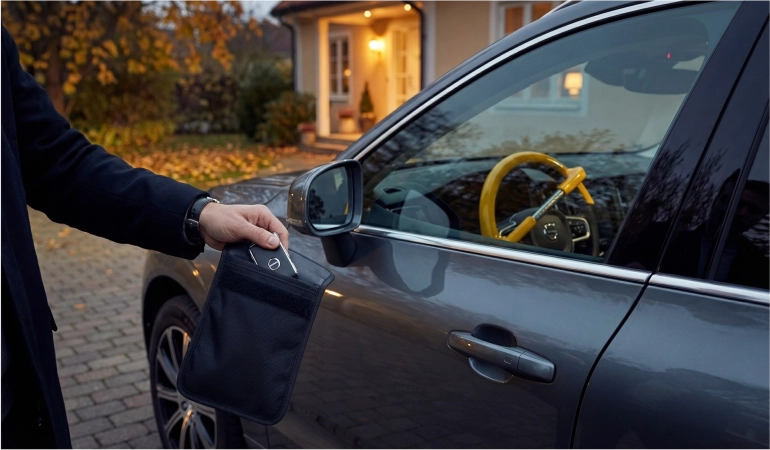
Outsmarting the Opportunists.
As vehicle technology continues to evolve, so too do the methods used by modern car thieves.
While Salisbury remains a relatively safe city, the rise of sophisticated techniques like "relay theft" means that car owners must be more vigilant than ever.
Protecting your vehicle is no longer just about locking the doors; it requires a layered approach that combines traditional physical security with modern electronic safeguards.
The Basics: Locking and Parking
The first line of defense is often the simplest. Always ensure your vehicle is locked, even if you are only stepping away for a moment at a petrol station or on your own driveway.
It is a common mistake to leave a car running while de-icing it on a cold morning; not only is this illegal in the UK, but most insurers will refuse to pay out if the vehicle is stolen while leftunattended.
When parking away from home, choose well-lit, busy areas whenever possible.
Look for car parks that have earned the Park Mark safer parking award, which indicates they have been vetted by the police for security. At home, consider installing motion-sensor securitylighting or a driveway post to provide an extra layer of deterrence.
Defeating the "Relay Attack"
Many modern cars feature keyless entry, which allows the vehicle to unlock automatically when the key fob is nearby. While convenient, this technology is vulnerable to "relay theft."
Thieves use a device to capture the signal from your key fob even if it is inside your house and relay it to the car, tricking it into opening and starting.
To protect yourself, keep your keys well away from the front door and windows.
The most effective solution is to store your fobs in a Faraday bag or a signal-blocking pouch.
These inexpensive accessories use a metallic lining to block the radio frequency, ensuring that thieves cannot "fish" for your car’s signal from outside.
Physical Deterrents: The Visible Warning
While electronic security is vital, physical deterrents remain highly effective because they are visible to a potential thief. A criminal looking for a quick getaway is far less likely to target a carthat requires them to spend several minutes cutting through a heavy-duty lock.
Security Device | Benefit | |
SteeringWheel Lock | Highly visible; prevents the car from being steered | |
Pedal Box | Encases the pedals to prevent driving | |
OBD PortLock | Prevents thieves from plugging in devices tobypass the immobiliser | |
GPS Tracker | Increases the chances of recovery if the car isstolen |
Advanced Protection and VIN Etching
For high-value or frequently targeted models, consider fitting an aftermarket immobiliser.
Systems like the Ghost Immobiliser require a unique sequence of button presses on the steering wheel or dashboard before the engine will start, making it nearly impossible for a thief to drive away even if they have cloned your key.
Another effective deterrent is VIN etching, where the vehicle’s unique identification number is permanently marked onto the windows. This makes the car much harder for a thief to "clone" orsell on, as they would have to replace all the glass to hide its true identity.
By combining these simple habits with the right security hardware, you can significantly reduce the risk of becoming a victim of car crime. Remember, the goal is to make your vehicle a "hard target" one that is simply not worth the time or risk for a thief to attempt.
User Comments (0)





Recommended for you.

Recommended for you.

Recommended for you.