

Wiltshire child poverty hotspots revealed in latest government data
New DWP figures highlight child poverty across Wiltshire, with South West Wiltshire identified as a hotspot for children in low-income households.
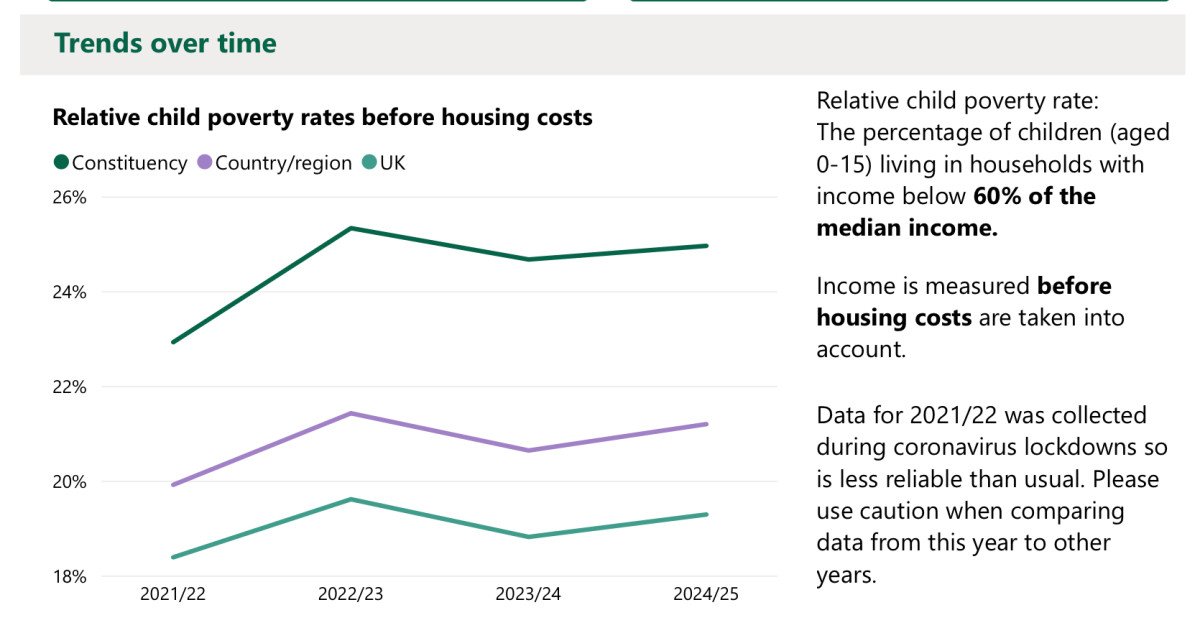
New government figures have highlighted areas across Wiltshire where children are more likely to be growing up in poverty, bringing renewed attention to the financial pressures facing families across the county.
The latest Department for Work and Pensions (DWP) data provides a picture of child poverty across different parts of Wiltshire, helping to identify communities where families may be facing greater financial difficulties.
The figures are particularly relevant at a time when many households continue to deal with the rising cost of everyday essentials, including food, housing, energy bills and childcare.
South West Wiltshire highlighted
Separate constituency-level figures reported by the Salisbury Journal have identified South West Wiltshire as having the highest proportion of children living in low-income Universal Credit households among constituencies in the county.
The findings highlight how financial hardship can vary significantly between neighbouring communities, even within the same local authority area.
The figures also underline why county-wide averages do not always tell the full story. Some communities can experience considerably greater financial pressure than others, making local data important when deciding where support may be needed most.
What the figures tell us
The DWP's latest Children in Low Income Families statistics cover the financial year ending March 2025. They include information on children aged under 16 living in families experiencing relative or absolute low income.
The national figures show that 3.27 million children, equivalent to 26% of children aged under 16, were living in relative low-income families after housing costs in 2024/25.
Before housing costs, the figure was 2.43 million children, or 19% of those aged under 16.
These two measures are important because rent and mortgage payments can make a substantial difference to the money families have available for food, clothing, transport and other essential costs.
Poverty is not limited to households without work
Low income does not necessarily mean that parents are unemployed. Families where one or both parents are working can still struggle to cover household expenses, particularly when wages do not keep pace with living costs.
Wiltshire Council's local intelligence has previously highlighted that a significant proportion of children in low-income families live in households where adults are in employment. This demonstrates that having a job does not always protect families from financial hardship.
For families, the pressure can affect several areas of everyday life, from keeping homes warm and buying nutritious food to paying for school activities, transport and suitable clothing.
Why local support matters
Identifying areas with higher levels of child poverty can help local authorities, charities, schools and community organisations understand where additional support may be needed.
Access to affordable childcare, family support services, food assistance and advice on benefits and household finances can make a difference to families experiencing financial difficulties.
The latest figures also provide an opportunity for local organisations to consider whether existing support is reaching the communities where it is most needed.
A continuing challenge for Wiltshire
Although Wiltshire is often viewed as a relatively prosperous county, the latest figures demonstrate that financial hardship remains an issue for some local families.
The differences between parliamentary constituencies and smaller neighbourhoods show why poverty needs to be understood at a local level rather than relying solely on county-wide averages.
As household costs continue to place pressure on family budgets, the findings are likely to keep child poverty and access to support firmly on the local agenda.
The DWP is expected to publish its next annual Children in Low Income Families statistics in spring 2027.
Residents and organisations can explore the government figures through the official DWP child poverty statistics and the House of Commons Library constituency data.

Editor & Founder | SalisburyPost Passionate about local journalism, I am dedicated to delivering trusted news and strengthening connections across Salisbury, Wiltshire and the wider UK . Through SalisburyPost, I aim to keep residents informed, celebrate community achievements, and highlight the stories that matter most to local people.


















Comments (0)