

China's robot Olympics sees humanoid robots sprint, fight and perform Tai Chi
China's 2026 World Humanoid Robot Games sees robots sprint, box, play football and perform Tai Chi, with a Chinese humanoid beating Usain Bolt's 100m record.
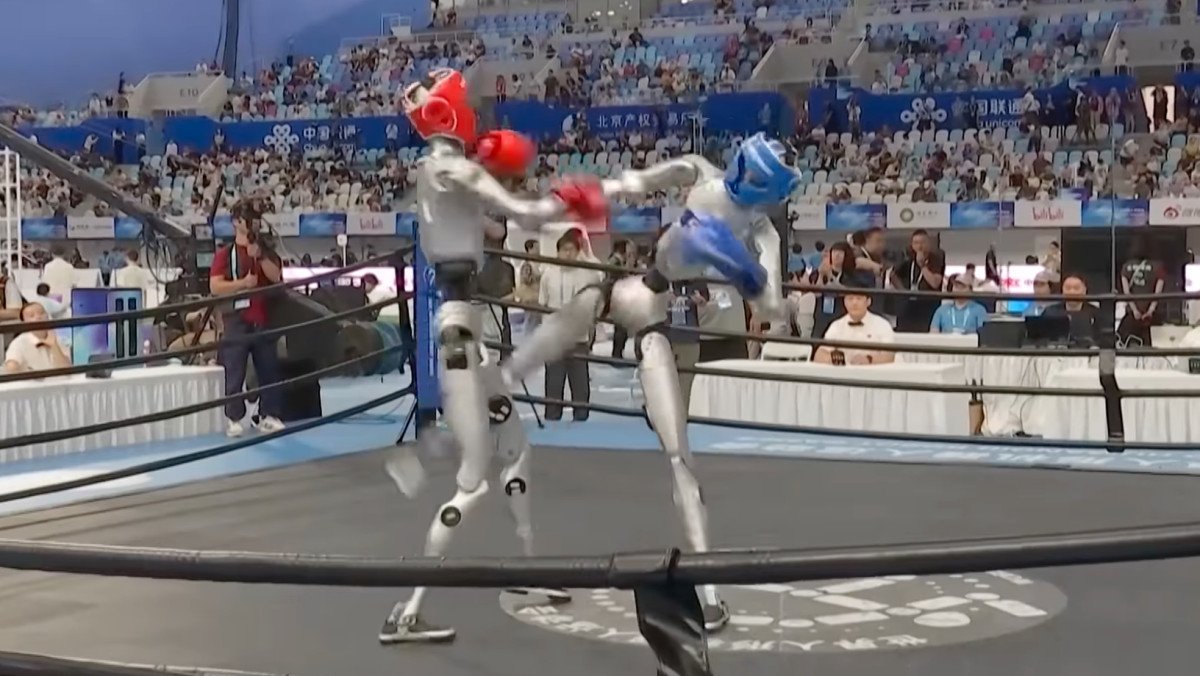
Humanoid robots have taken centre stage in Beijing as China hosts the 2026 World Humanoid Robot Games, an event being described as the Olympics of robotics.
More than 2,000 robots are taking part in the five-day competition, with machines competing across 51 events, including sporting competitions and challenges designed to test their ability to perform practical tasks.
The robots have been competing in events including sprinting, football, boxing, kickboxing and Tai Chi, giving spectators a glimpse of how quickly humanoid technology is developing.
One of the biggest talking points has been the robots' performance on the running track.
A Chinese humanoid robot called Tiangong Ultra recorded a time of 8.86 seconds over 100 metres, beating Usain Bolt's human world record of 9.58 seconds.
The achievement comes after another robot had already run the distance in 9.39 seconds earlier in the competition.
The machines are not simply being tested for speed. Organisers have introduced challenges designed to examine how robots could eventually be used in real-world environments, including factories, restaurants, offices and emergency situations.
Some of the events have produced impressive performances, while others have demonstrated the limitations of current humanoid robots.
During sprint races, some machines have struggled to stop after crossing the finish line, with robots crashing into protective barriers and requiring assistance.
The contrast between impressive speed and difficulty with basic movement highlights one of the biggest challenges facing robotics: making machines capable of operating safely and reliably outside controlled demonstrations.
The games also include events involving martial arts and Tai Chi, where robots demonstrate balance, movement and coordination.
China has made humanoid robotics a major technological priority, with companies and research organisations investing heavily in machines designed for manufacturing, logistics and other practical applications.
The World Humanoid Robot Games therefore offer more than entertainment. They provide companies and researchers with an opportunity to test new robotic technology in competitive conditions and demonstrate what today's machines can do.
With more than 2,000 robots and hundreds of teams taking part, the event also highlights the growing international competition to develop the next generation of humanoid machines.
The question now is whether robots that can sprint faster than humans, perform martial arts and play sports can eventually become reliable enough to work alongside people in everyday life.

Editor & Founder | SalisburyPost Passionate about local journalism, I am dedicated to delivering trusted news and strengthening connections across Salisbury, Wiltshire and the wider UK . Through SalisburyPost, I aim to keep residents informed, celebrate community achievements, and highlight the stories that matter most to local people.




















Comments (0)