

Emergency Alerts system cost taxpayers up to £25.3 million, government figures show
The UK Government’s Emergency Alerts system cost up to £25.3 million during its development and first three years of operation, covering technology, mobile networks and security.
The UK Government’s nationwide Emergency Alerts system cost an estimated maximum of £25.3 million to develop and operate during its first three years, according to figures examined by fact-checkers and reported by UK media.
The figure covers the overall development and delivery of the emergency warning system, rather than a £3 million charge for a single alert.
The system was developed to allow authorities to send urgent warnings directly to compatible mobile phones during events including extreme weather, flooding, wildfires and other serious emergencies.
A significant part of the cost was associated with contracts providing the technical infrastructure and the ability to broadcast alerts through mobile networks.
The government’s contract with Fujitsu was worth up to around £5 million, covering technical architecture and systems supporting the service.
A further £18.6 million was allocated through contracts with mobile network operators to provide the broadcasting capability needed to deliver emergency messages to millions of phones.
The remaining costs included areas such as security testing and legal work required to establish and operate the national system.
Importantly, individual emergency alerts do not simply cost taxpayers a fixed £3 million each time a message is sent. The costs relate primarily to establishing and maintaining the wider system and its broadcasting capability.
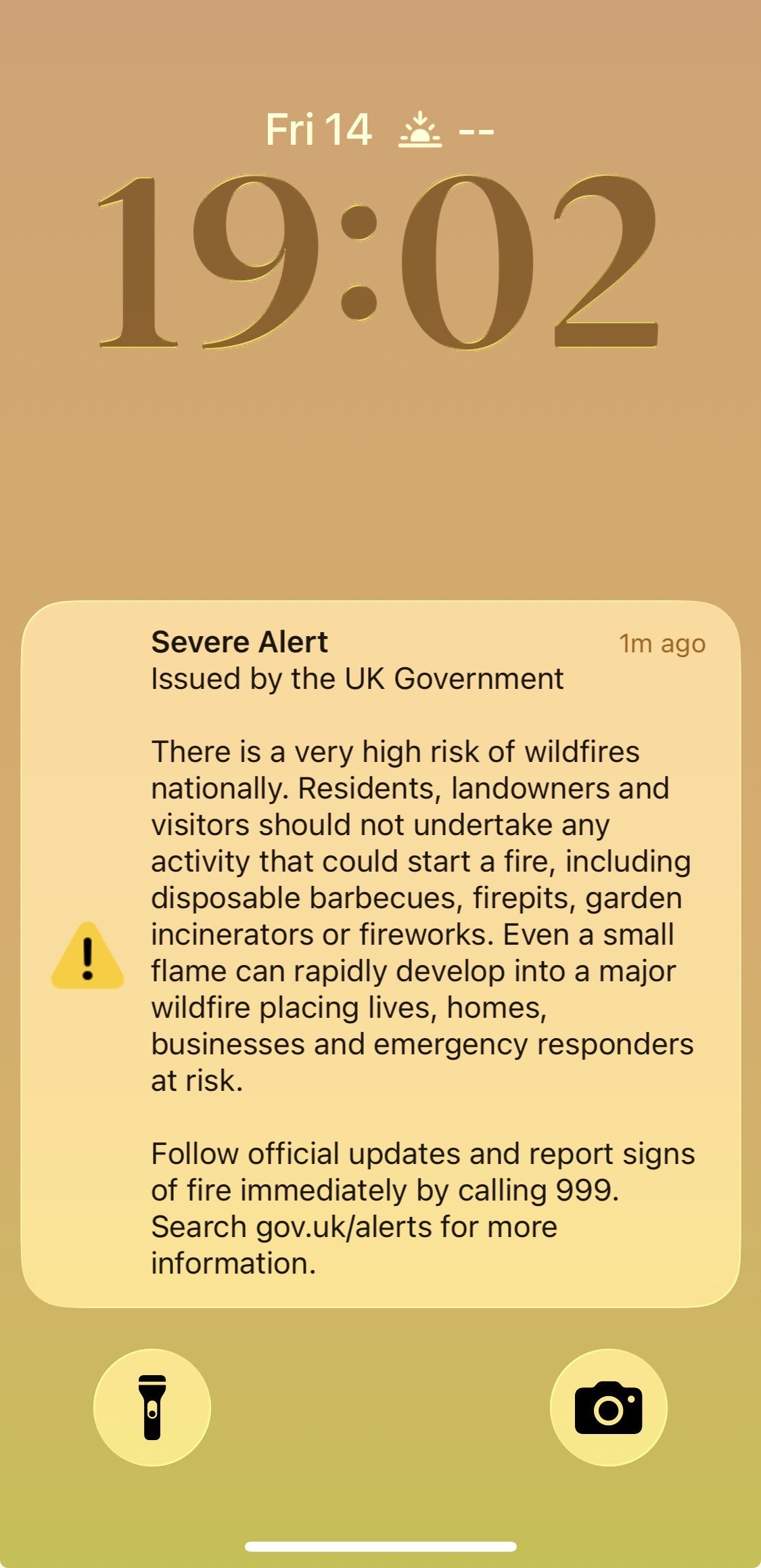
The issue has received renewed attention after millions of people across England and Wales received a Severe Alertwarning about extreme wildfire risks during the recent hot and dry weather.
The emergency message was issued alongside wider government measures, including action to restrict the use and sale of disposable barbecues and additional support for firefighting operations.
The Emergency Alerts system is designed to provide authorities with a rapid way of warning the public when there is an immediate risk to life or serious danger.
However, there is a distinction between warning people about an immediate emergency and informing the public about a developing risk or government action.
For example, if authorities know that a fire is approaching a populated area and people need to take immediate action, a phone alert can provide a vital warning before emergency services reach every household.
But if there is no immediate threat to life and the message is mainly intended to announce a policy decision, restriction or general public information, there is a question over whether a loud, nationwide-style emergency alert is the most appropriate tool.
What do you think? Share your views in the comments.

Editor & Founder | SalisburyPost Passionate about local journalism, I am dedicated to delivering trusted news and strengthening connections across Salisbury and Wiltshire. Through SalisburyPost, I aim to keep residents informed, celebrate community achievements, and highlight the stories that matter most to local people.


















Comments (2)