

UK Emergency Alerts cost £25.3 million, but should the system be reserved for immediate emergencies?
The UK Emergency Alerts system cost up to £25.3 million. But should phone alerts be reserved for immediate threats to life and situations where the public must take urgent action?
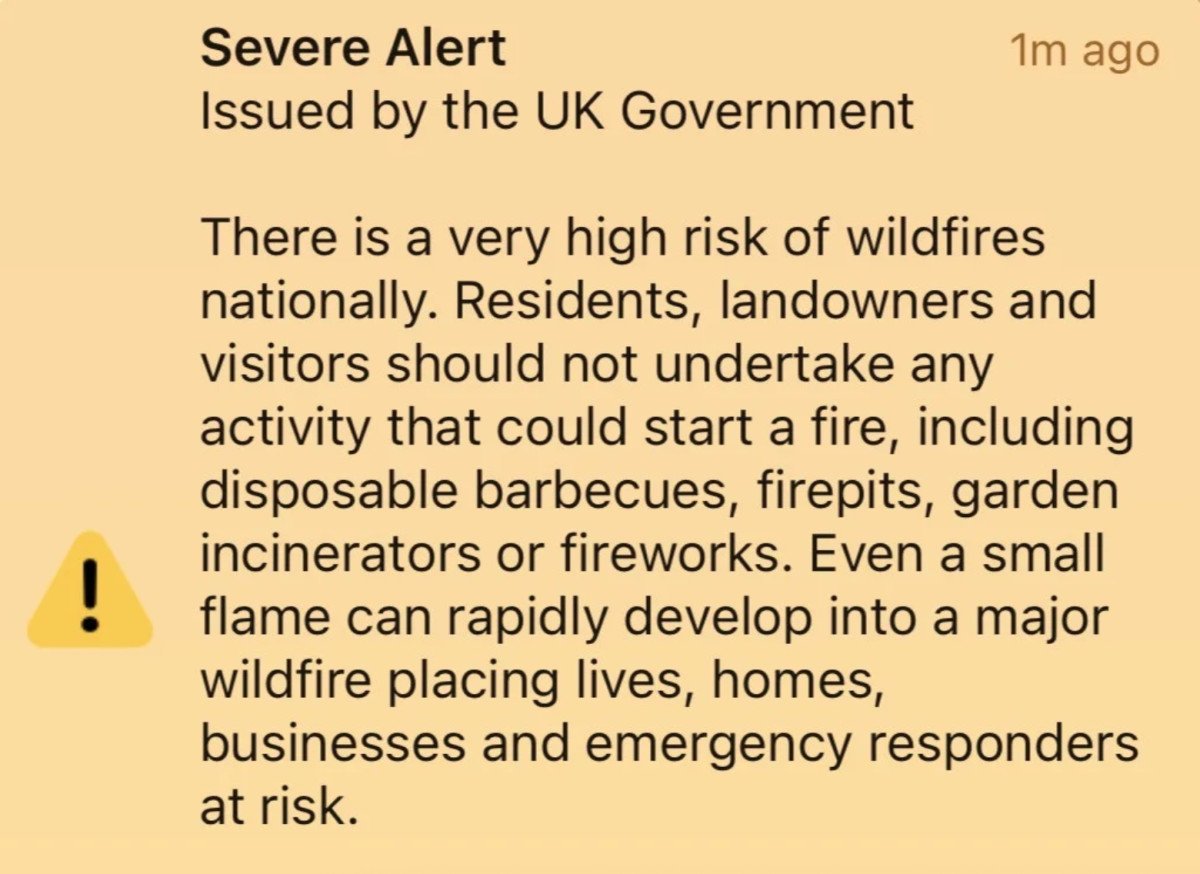
The UK Government’s Emergency Alerts system was designed to warn the public when there is an immediate danger to life, but questions are being raised about how and when the system should be used.
The system cost a maximum of £25.3 million for the development of its technical architecture and the first three years of operational delivery. This included contracts with Fujitsu, mobile network operators, security testing and legal work.
Government guidance states that Emergency Alerts are intended for life-threatening emergencies, including wildfires, severe flooding and extreme storms.
The Government’s own guidance sets out four key thresholds for sending an alert: lives must be at risk, the situation must be urgent, action must be needed and there must be a defined location that can be targeted.
That raises an important question about the use of the system during major fires.
A wildfire that is already threatening homes, roads or communities would clearly fit the purpose of the Emergency Alerts system. A warning telling residents to evacuate, stay indoors or avoid a dangerous area could potentially save lives.
However, there is a distinction between warning people about an immediate emergency and informing the public about a developing risk or government action.
For example, if authorities know that a fire is approaching a populated area and people need to take immediate action, a phone alert can provide a vital warning before emergency services reach every household.
But if there is no immediate threat to life and the message is mainly intended to announce a policy decision, restriction or general public information, there is a question over whether a loud, nationwide-style emergency alert is the most appropriate tool.
The Government has previously said the system would be used very rarely, with alerts intended for situations involving an immediate risk to people's lives.
This does not mean the system should only be used after an emergency has already happened. In fact, the purpose of an emergency warning is often to give people time to act before the danger reaches them.
The key issue is therefore whether there is a genuine and urgent risk to life and whether members of the public need to take immediate action.
With the system costing taxpayers millions of pounds to establish and operate, maintaining public trust is also important. If people receive too many alerts for situations that do not require immediate action, there is a risk that future warnings could be taken less seriously.
The Emergency Alerts system is a powerful tool, but its effectiveness depends on using it for the situations it was designed for: urgent threats where people need to know about the danger and take action quickly.

Editor & Founder | SalisburyPost Passionate about local journalism, I am dedicated to delivering trusted news and strengthening connections across Salisbury and Wiltshire. Through SalisburyPost, I aim to keep residents informed, celebrate community achievements, and highlight the stories that matter most to local people.




















Comments (0)